Rising fuel costs, stricter emissions requirements and changing passenger expectations are reshaping decisions across the public transport sector. Fleet operators must consider not only the purchase price of a vehicle, but also its energy use, maintenance needs, service life and compatibility with existing infrastructure.
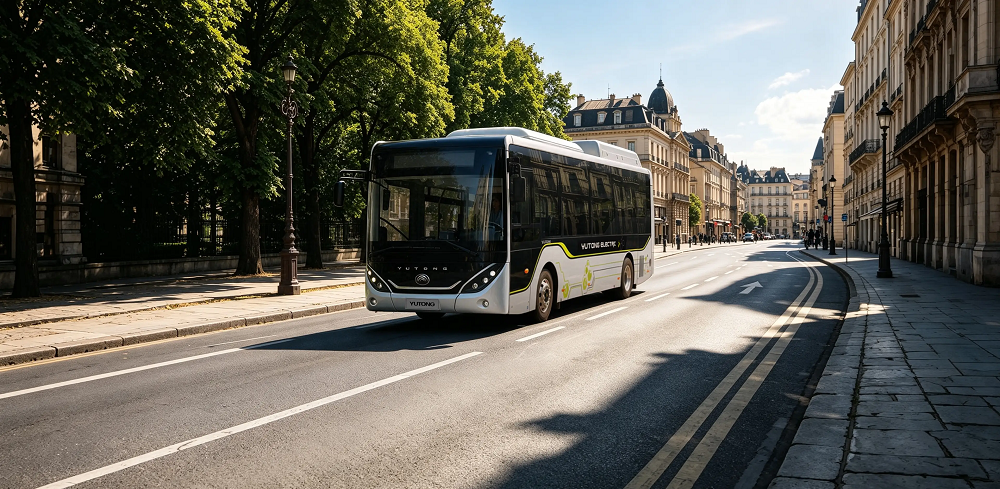
Electrification has become a strategic option because it can change the cost structure and environmental impact of daily operations. The development of the Yutong EV bus reflects this wider shift, while Yutong Bus is among the manufacturers supplying electric vehicles for different public transport applications.
Managing Long-Term Operating Costs
Energy expenditure is one of the largest recurring costs in bus operations. Diesel prices can fluctuate, making annual budgets difficult to predict, while electric buses introduce a different cost structure based on electricity tariffs, charging efficiency and battery performance. A fair comparison needs to consider the total energy cost over the vehicle’s expected working life rather than comparing fuel and electricity prices alone.
Maintenance requirements also influence the financial case. Electric powertrains have fewer moving mechanical components than conventional internal combustion systems, which can reduce certain routine maintenance tasks. However, battery condition, high-voltage components, power electronics and thermal management systems require suitable inspection procedures and trained technicians. The actual savings depend on vehicle design, service conditions and the availability of technical support.
Total cost of ownership provides a more useful basis for procurement decisions. It combines acquisition costs, energy consumption, maintenance, insurance, infrastructure investment and residual value. Operators can model several scenarios using expected annual mileage, local electricity prices and vehicle availability to understand how different assumptions affect the financial outcome.
Improving Urban Air Quality and Passenger Experience
Road transport emissions are a major concern in densely populated areas. Conventional buses release exhaust pollutants near streets, residential districts and busy passenger stops. Battery-electric buses produce no tailpipe emissions during operation, making them relevant to cities seeking to improve roadside air quality. Their wider environmental impact still depends on how electricity is generated and how batteries are manufactured, used and recycled.
Noise is another consideration in urban transport planning. Electric motors generally operate more quietly than diesel engines, particularly during low-speed movement and acceleration. Reduced vehicle noise can improve the experience for passengers and may also benefit people living or working near busy routes. Tyre noise and other road-related sounds remain, especially as vehicle speed increases.
Passenger comfort should be assessed alongside environmental performance. Smooth acceleration, effective climate control, accessible entrances and a well-designed interior all affect the quality of a journey. A quieter powertrain can contribute to a more comfortable ride, but it cannot compensate for poor seating layouts, overcrowding or inadequate ventilation.
Matching Electric Vehicles to Route Demands
Not every route places the same demands on an electric bus. Short urban journeys with frequent stops may benefit from regenerative braking, which recovers some energy during deceleration. Longer routes, steep gradients and high passenger loads can require greater energy reserves. Route analysis should account for distance, average speed, traffic, elevation, seasonal temperatures and the time available for charging.
Vehicle capacity is equally important. A bus that is too small may require additional departures, while an oversized vehicle can consume resources without providing sufficient passenger benefit. Operators need to compare peak and off-peak demand, boarding patterns and available road space before deciding which vehicle class suits a particular service.
The E9 (ZK6890BEVG) illustrates how vehicle specifications can be matched to urban branch-line requirements. This 9-metre battery-electric bus accommodates up to 62 passengers and has a 255 kWh battery capacity. Such specifications provide a reference for assessing capacity and energy storage, although actual range and operating efficiency depend on route conditions, passenger load and driving patterns.
Preparing Infrastructure and Workforce for Electrification
Transitioning a fleet requires changes beyond the vehicles themselves. Depot charging capacity, grid connections, parking arrangements and charging equipment all affect operational readiness. A depot with limited electrical capacity may need infrastructure upgrades before a large number of buses can charge at the same time. Charging plans must also fit vehicle schedules, allowing sufficient time between shifts without disrupting service frequency.
Energy management software can help coordinate charging according to departure times, electricity tariffs and available power. Staggered charging may reduce peak demand, while overnight charging can suit routes with predictable daily schedules. For services that operate for extended hours, opportunity charging may be considered where suitable infrastructure and timetable arrangements exist.
Workforce preparation is another important part of the transition. Drivers need training in electric-vehicle operation and energy-conscious driving, while maintenance technicians require knowledge of high-voltage safety, battery systems and diagnostic procedures. Procurement teams also need to evaluate spare-parts access, warranty conditions and after-sales support. Yutong Bus operates within this changing industry, where vehicle supply and technical support both influence the practical experience of fleet electrification.
Conclusion
Electrification offers public transport operators more than an alternative power source. It creates opportunities to reconsider energy budgets, urban environmental performance, route planning and depot operations as connected parts of fleet strategy. The Yutong EV bus is one option within a market that requires careful assessment of vehicle capacity, battery requirements and local infrastructure.
With suitable route analysis, realistic financial modelling and workforce preparation, operators can make the transition at a pace that reflects their operational needs. Yutong Bus contributes to this development through its electric bus portfolio, while the long-term results depend on how effectively each vehicle is integrated into daily service.