University lecture halls are changing as teaching methods, campus space requirements, and student expectations evolve. Traditional fixed rows still serve large classes, but universities also need spaces that support note-taking, group discussion, presentations, and digital learning. Seating design now involves more than chair comfort. Institutions must consider writing surfaces, aisle access, room capacity, maintenance, and long-term operating costs. These factors influence how effectively a lecture hall serves students and teaching staff.
Flexible Layouts Reflect New Teaching Methods
University teaching increasingly combines lectures with interactive activities. Seating arrangements need to accommodate both formats without making classrooms difficult to manage. Modular configurations give planners more options when designing rooms for different class sizes and teaching schedules.
Flexible audience seating can support several layouts, depending on the room’s purpose. Individual seats may suit presentation spaces, while integrated writing surfaces are useful for courses that require frequent note-taking. Procurement teams should identify the main teaching activities before comparing products.
Room planning also requires careful measurement. Buyers should record the available floor area, aisle widths, door positions, and distances between seating rows. These details help determine whether a proposed layout offers sufficient capacity without restricting movement during class changes.
Comfort Must Support Long Study Sessions
Students may remain seated for extended periods during lectures, examinations, or academic presentations. Seat dimensions, backrest shape, and padding therefore deserve attention during product evaluation. Comfort should be assessed alongside posture support and the practical requirements of the teaching environment.
Materials also affect the experience. Polypropylene components can provide a practical seating surface, while padded seats introduce an additional layer of cushioning. Buyers should compare the construction of each model rather than assuming that similar-looking chairs offer the same level of support.
Maintenance requirements matter in busy university buildings. Procurement teams can ask about cleaning methods, replacement components, surface durability, and the availability of service support. Reviewing these details before purchasing helps facilities teams estimate the effort involved in maintaining seating throughout the academic year.
Writing Surfaces Are Becoming More Important
Digital learning has not removed the need for physical writing space. Students may still use notebooks, printed materials, tablets, or laptops during lectures. Integrated tables can give them a designated working area without requiring separate desks for every seat.
The size and construction of the tabletop influence daily usability. Buyers should consider the space needed for learning materials and the distance between adjacent users. Table edges, surface finishes, and the stability of the supporting structure also deserve inspection before a large order is approved.
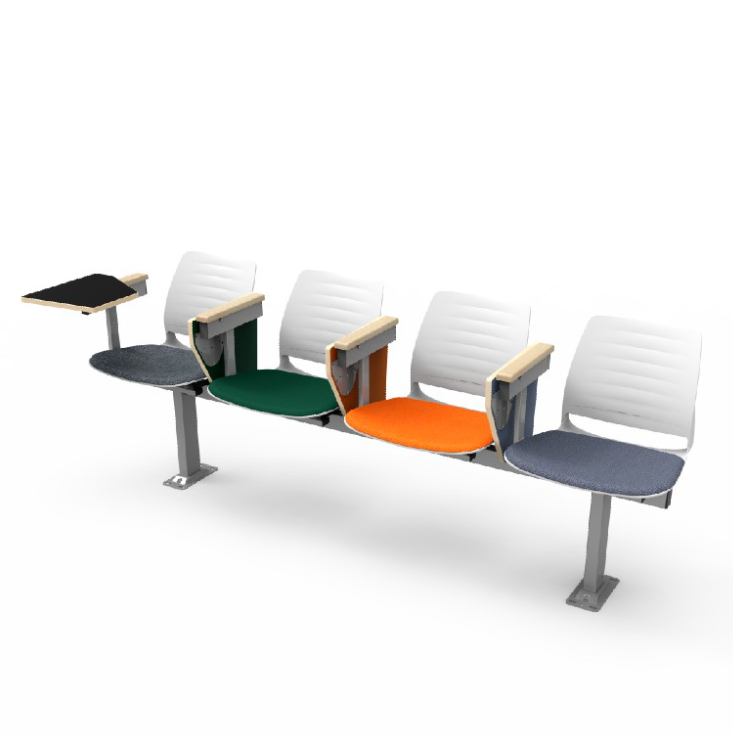
The Titan Flex L-E03 illustrates this combined approach to educational seating. Its specified configuration includes a polypropylene back, a padded polypropylene seat, and an 18 mm quality plywood tabletop with a laminate finish. The stanchion and base use cold-rolled steel with a powder-coated finish. These components provide a reference for evaluating seating and writing surfaces together.
Space Efficiency Influences Campus Planning
Universities often need to balance student capacity with comfortable circulation. Increasing the number of seats may appear economical, but crowded rows can complicate access and make movement difficult. Layout decisions should therefore account for both occupancy targets and the space needed for students to enter, leave, and use their seats.
Seat configuration is another consideration. Single-pedestal designs and multi-seat arrangements can serve different room layouts. Four-seat options may suit selected teaching environments, while individual units can offer more flexibility when planners need to adjust the arrangement. Suitability depends on the room dimensions and intended use.
Before finalizing a layout, project teams should review a scaled floor plan and, where practical, test a sample arrangement. Checking the distance between rows, the reach to writing surfaces, and access to exits can reveal issues that are difficult to identify from product photographs alone.
Material Selection Affects Lifecycle Costs
Purchase price represents only one part of the cost of university seating. Cleaning labor, repairs, replacement parts, installation, and future refurbishment can affect expenditure over several years. Procurement teams should compare these factors when reviewing competing proposals.
Material specifications offer a useful starting point. Polypropylene, laminated plywood, and powder-coated cold-rolled steel each have different care requirements and potential wear points. Buyers should request relevant product documentation and clarify which cleaning agents and maintenance procedures are suitable for the specified finishes.
Lifecycle planning also benefits from consistent product specifications. Universities managing several lecture halls can define common requirements for seat construction, tabletop thickness, finish, and replacement components. This approach can simplify purchasing comparisons and help maintenance teams work with a more consistent range of furniture.
Procurement Requires More Than a Product Catalogue
Large educational projects involve coordination among university administrators, architects, contractors, furniture suppliers, and facilities teams. Each group may have different priorities. Administrators focus on budgets and capacity, designers consider room layouts, and maintenance staff assess cleaning and repair requirements.
Working with an experienced seating supplier can help procurement teams coordinate these considerations. Leadcom seating provides educational seating solutions for different learning environments. Its stated capabilities include integrated manufacturing processes, independent mold development, metalworking, injection molding, and PU foam production. Such production arrangements are relevant when buyers need to review product consistency and project requirements.
Project planning should also cover delivery schedules, installation responsibilities, warranty terms, and after-sales support. Leadcom seating offers a five-year warranty and an eight-part VIP service system, according to the supplied company information. Buyers should confirm the applicable coverage, service scope, and delivery conditions for their specific project before placing an order.
Making Design Decisions With Clear Priorities
Current lecture hall seating trends point toward practical combinations of comfort, integrated writing space, adaptable configurations, and easier maintenance. Universities do not need to adopt every new design feature. They should identify the requirements that matter most for their teaching methods, building constraints, and budget.
A clear evaluation process helps institutions compare products on consistent terms. Reviewing dimensions, materials, tabletop specifications, cleaning procedures, warranty conditions, and service arrangements can reduce uncertainty during procurement. Sample inspections and layout checks can provide additional evidence before approval.
For university planners, well-designed audience seating is a long-term investment in the learning environment. Matching the furniture to actual classroom activities can help create lecture halls that support focused study, efficient space use, and manageable maintenance across the campus.